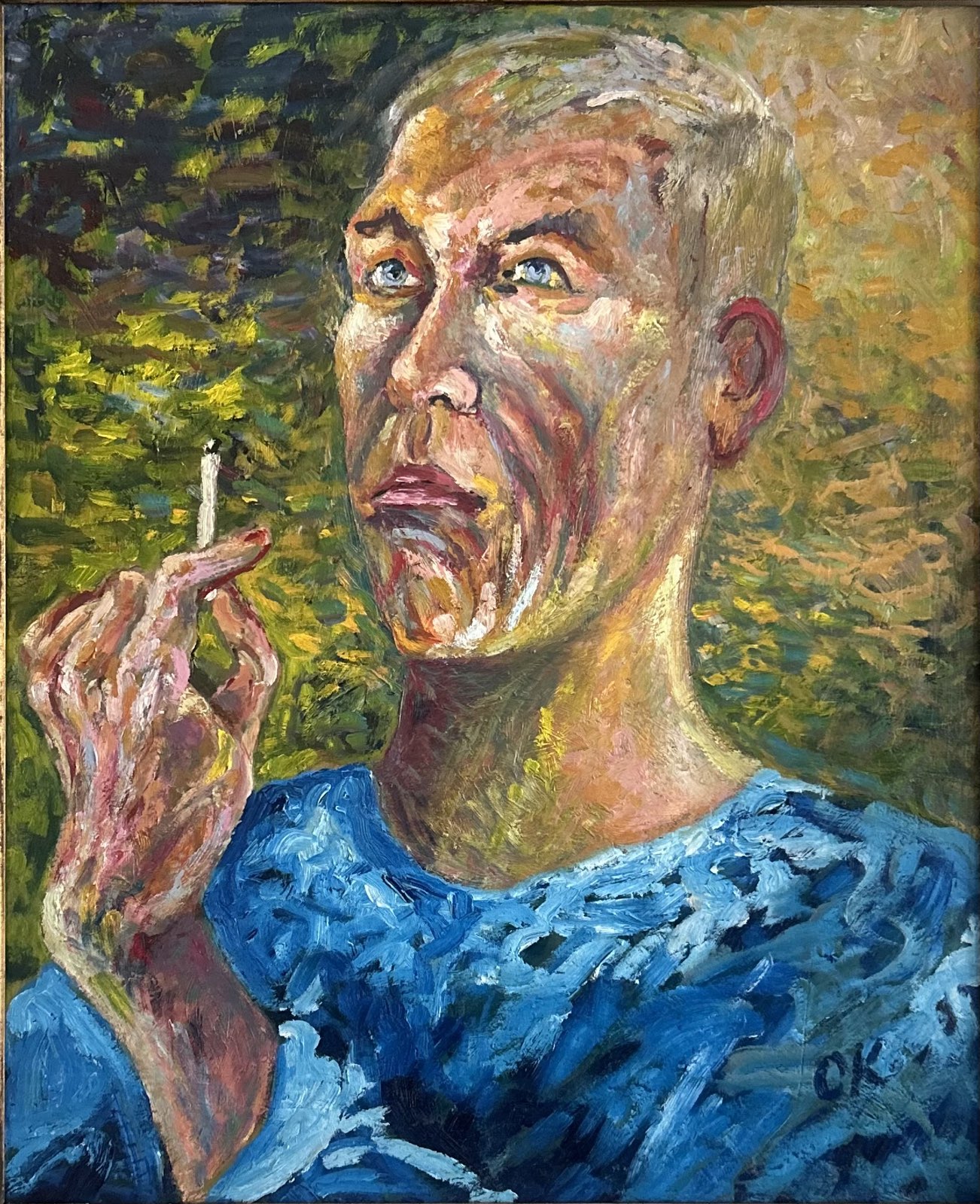
1935–1936
Self-Portrait with a Cigarette
Oskar Kokoschka (1886–1980)
Self-Portrait with a Cigarette by Oskar Kokoschka (also spelled Oscar Kokoschka), the Austrian expressionist (1886–1980), is an oil painting made between 1935 and 1936. Not to be confused with Edvard Munch’s Self-Portrait with Cigarette (1895).
Last updated 30 September 2026
- Year
- 1935–1936
- Artist
- Oskar Kokoschka
- Medium
- Oil on canvas
- Movement
- Expressionism
Self-Portrait with a Cigarette is a painting created by Austrian artist Oskar Kokoschka between 1935 and 1936. In this intense and expressive work, Kokoschka depicts himself holding a cigarette, capturing both his inner turmoil and reflective nature. The piece offers a raw glimpse into the artist’s psyche during a time of personal and political upheaval in Europe.
In 1937, the painting was displayed in the infamous Nazi exhibition “Degenerate Art” (Entartete Kunst), which aimed to discredit modernist and avant-garde movements seen as threats to the regime’s ideals. Like many works featured in the show, it faced possible confiscation or destruction—but was fortunately recovered by the artist before it disappeared.
Frequently asked questions
What do we know about Oscar Kokoschka’s Self-Portrait with a Cigarette?
Oskar Kokoschka (sometimes spelled Oscar) shows himself holding a cigarette, his gaze turned upward, against a background of green and gold brushwork. Painted between 1935 and 1936 in oil on canvas, it captures his inner turmoil and reflective nature in 1930s Europe. It is distinct from Edvard Munch’s Self-Portrait with Cigarette (1895).
Oscar or Oskar Kokoschka: which spelling is correct?
The original spelling is Oskar Kokoschka, the Austrian painter (1886–1980). “Oscar” is a common variant: it is the same person.
Who painted Self-Portrait with a Cigarette?
This Self-Portrait with a Cigarette was painted by Oskar Kokoschka (1886–1980), the Austrian pioneer of expressionism.
Is this the same painting as Munch’s Self-Portrait with a Cigarette?
No. Edvard Munch painted a Self-Portrait with a Cigarette in 1895, now held at the National Museum in Oslo. The painting shown here is a different work, by Oskar Kokoschka.
When was Kokoschka’s Self-Portrait with a Cigarette painted?
Between 1935 and 1936, in the years of political upheaval that preceded the Second World War.
What does the painting show?
Kokoschka depicts himself holding a cigarette, his gaze turned upward, against a background of green and gold brushwork. The work captures both his inner turmoil and his reflective nature.
What is its connection to “Degenerate Art”?
In 1937 the painting was displayed in the Nazi exhibition “Degenerate Art” (Entartete Kunst), which sought to discredit modernist and avant-garde art.
Who is the real author of Self-Portrait with a Cigarette: Munch or Kokoschka?
Both painted a work with this title: Edvard Munch in 1895, Oskar Kokoschka in 1935–1936. They are two different paintings. See the comparison article.
What medium is Kokoschka’s Self-Portrait with a Cigarette?
Oil on canvas.
Did Kokoschka paint other self-portraits?
Yes. Among them are Self-Portrait with Doll (1920) and Self-Portrait of a Degenerate Artist (1937).
Who was Oskar Kokoschka?
An Austrian expressionist painter, draughtsman and playwright (1886–1980), born in Pöchlarn and died in Montreux.
Context references
These pages place the work in context: the painter, Munch’s self-portrait, “degenerate art”.